Happenings

Sermons by Pastor Walter Snyder plus announcements, articles, videos, and anything else that doesn’t fit Ask the Pastor or the Luther Library.


23 August 2020

Proper 16A Sermon: The Gates of Hades

Preached on Matthew 16:13–20
The Twelfth Sunday after Pentecost
23 August AD 2020

Video: Click to view the YouTube video of The Gates of Hades.

Audio: Alternatively, choose The Gates of Hades to hear the MP3.

Matthew 16:13–20 Summary: The rock upon which Jesus builds His Church isn’t Peter but rather Peter’s confession. Confessing Jesus as the Christ, Peter thus identified Him as the “spiritual Rock” of whom Israel drank, for “the Rock was Christ. (1 Corinthians 10:4)”

Being built on this Rock gives us the fruits of His victories over sin, death, and devil. The “Son of the Living God” died for us yet He is still the living Son of God. Death comes because of sin. Jesus’ resurrection guarantees that our sins which He carried to the cross are blotted out and cannot hold Him — or us — bound by Hades and eternally trapped in the grave. Jesus kicked down death’s door and grants believers egress into everlasting life.

Text: Now when Jesus came into the district of Caesarea Philippi, he asked his disciples, “Who do people say that the Son of Man is?”

And they said, “Some say John the Baptist, others say Elijah, and others Jeremiah or one of the prophets.”

He said to them, “But who do you say that I am?”

Simon Peter replied, “You are the Christ, the Son of the living God.”

And Jesus answered him, “Blessed are you, Simon Bar-Jonah! For flesh and blood has not revealed this to you, but my Father who is in heaven. And I tell you, you are Peter, and on this rock I will build my church, and the gates of hell shall not prevail against it. I will give you the keys of the kingdom of heaven, and whatever you bind on earth shall be bound in heaven, and whatever you loose on earth shall be loosed in heaven.”

Then he strictly charged the disciples to tell no one that he was the Christ. Matthew 16:13–20

Scripture quoted from The Holy Bible, English Standard Version®, © 2001 by Crossway Bibles, a publishing ministry of Good News Publishers. Used by permission. All rights reserved.

Video: Click to view the YouTube video of The Gates of Hades.

Audio: Alternatively, choose The Gates of Hades to hear the MP3.

Other Readings: Psalm 138; Isaiah 51:1–6; Romans 11:33–12:8

Labels: , , , , , , , , , , , ,

14 June 2020

Proper 6A Sermon: Perfect Timing

Preached on Romans 5:6–15
The Second Sunday after Pentecost
14 June AD 2020

Video: Click to view the YouTube video of Perfect Timing.

Audio: Alternatively, choose Perfect Timing to hear the MP3.

Romans 5:6–15 Summary: Adam brought sin and death into the world through his fall but at the absolutely correct time Jesus reconciled us to God through His suffering and death and gave us life by His resurrection.

Text: For while we were still weak, at the right time Christ died for the ungodly. For one will scarcely die for a righteous person — though perhaps for a good person one would dare even to die — but God shows his love for us in that while we were still sinners, Christ died for us.

Since, therefore, we have now been justified by his blood, much more shall we be saved by him from the wrath of God. For if while we were enemies we were reconciled to God by the death of his Son, much more, now that we are reconciled, shall we be saved by his life. More than that, we also rejoice in God through our Lord Jesus Christ, through whom we have now received reconciliation.

Therefore, just as sin came into the world through one man, and death through sin, and so death spread to all men because all sinned — for sin indeed was in the world before the law was given, but sin is not counted where there is no law. Yet death reigned from Adam to Moses, even over those whose sinning was not like the transgression of Adam, who was a type of the one who was to come.

But the free gift is not like the trespass. For if many died through one man’s trespass, much more have the grace of God and the free gift by the grace of that one man Jesus Christ abounded for many. Romans 5:6–15

Scripture quoted from The Holy Bible, English Standard Version®, © 2001 by Crossway Bibles, a publishing ministry of Good News Publishers. Used by permission. All rights reserved.

Video: Click to view the YouTube video of Perfect Timing.

Audio: Click Perfect Timing to listen to the MP3.

Other Readings: Psalm 100; Exodus 19:2–8; Matthew 9:35–10:8

Labels: , , , , , , , , , , ,

17 May 2020

Easter 6A Sermon: Baptism Now Saves You

Preached on 1 Peter 3:13–22
The Sixth Sunday of Easter
17 May AD 2020

Video: Click to view the YouTube video of Baptism Now Saves You.

Audio: Alternatively, choose Baptism Now Saves You, to hear the MP3.

Genesis 6–8 Summary: Peter draws us to examine the destructive power and life-giving nature of water. In the Flood, the wicked perished but the righteous were raised to safety. In Baptism, the sinful nature is drowned and the new creature raised up.

As we are baptized, we participate in Jesus’ death, which destroys sin and death. Baptism then also joins us to His resurrection, raising us to lives of faith on earth and opening the way to eternal life we are resurrected.

In the time of Noah, there was only one place of safety. So it remains in ours. Noah’s Ark was a chapel in Christ’s Church and those aboard were rescued from the temporal and eternal death outside.

There is no salvation outside the Holy Christian Church. God brings us aboard through water and the Word, provisions us with His Son’s body and blood, and takes care of navigation, bringing us not to the Mountains of Ararat but to His holy mountain, Zion — the New Jerusalem, city of the saints and forever blest.

Text: Now who is there to harm you if you are zealous for what is good? But even if you should suffer for righteousness’ sake, you will be blessed.

Have no fear of them, nor be troubled, but in your hearts honor Christ the Lord as holy, always being prepared to make a defense to anyone who asks you for a reason for the hope that is in you; yet do it with gentleness and respect, having a good conscience, so that, when you are slandered, those who revile your good behavior in Christ may be put to shame.

For it is better to suffer for doing good, if that should be God’s will, than for doing evil.

For Christ also suffered once for sins, the righteous for the unrighteous, that he might bring us to God, being put to death in the flesh but made alive in the spirit, in which he went and proclaimed to the spirits in prison, because they formerly did not obey, when God's patience waited in the days of Noah, while the ark was being prepared, in which a few, that is, eight persons, were brought safely through water.

Baptism, which corresponds to this, now saves you, not as a removal of dirt from the body but as an appeal to God for a good conscience, through the resurrection of Jesus Christ, who has gone into heaven and is at the right hand of God, with angels, authorities, and powers having been subjected to him. 1 Peter 3:13–22

Scripture quoted from The Holy Bible, English Standard Version®, © 2001 by Crossway Bibles, a publishing ministry of Good News Publishers. Used by permission. All rights reserved.

Video: Click to view the YouTube video of Baptism Now Saves You.

Audio: Click Baptism Now Saves You to listen to the MP3.

Other Readings: Psalm 66:8–20; Acts 17:16–31; John 14:15–21

Labels: , , , , , , , , ,

Easter 6A Sermon: Very Religious

Preached on Acts 17:16–31
The Sixth Sunday of Easter
17 May AD 2020

Video: Click to view the YouTube video of Very Religious.

Audio: Alternatively, choose Very Religious, to hear the MP3.

Acts 17:16–31 Summary: Many people are “very religious,” as Paul says of the Athenians. But only the true religion — faith in the crucified and risen Jesus Christ — brings peace with God and life everlasting.

Text: Now while Paul was waiting for them at Athens, his spirit was provoked within him as he saw that the city was full of idols. So he reasoned in the synagogue with the Jews and the devout persons, and in the marketplace every day with those who happened to be there.

Some of the Epicurean and Stoic philosophers also conversed with him. And some said, “What does this babbler wish to say?” Others said, “He seems to be a preacher of foreign divinities” — because he was preaching Jesus and the resurrection.

And they took him and brought him to the Areopagus, saying, “May we know what this new teaching is that you are presenting? For you bring some strange things to our ears. We wish to know therefore what these things mean.” Now all the Athenians and the foreigners who lived there would spend their time in nothing except telling or hearing something new.

So Paul, standing in the midst of the Areopagus, said: “Men of Athens, I perceive that in every way you are very religious. For as I passed along and observed the objects of your worship, I found also an altar with this inscription: ‘To the unknown god.’

“What therefore you worship as unknown, this I proclaim to you. The God who made the world and everything in it, being Lord of heaven and earth, does not live in temples made by man, nor is he served by human hands, as though he needed anything, since he himself gives to all mankind life and breath and everything. And he made from one man every nation of mankind to live on all the face of the earth, having determined allotted periods and the boundaries of their dwelling place, that they should seek God, and perhaps feel their way toward him and find him.

“Yet he is actually not far from each one of us, for ‘In him we live and move and have our being’; as even some of your own poets have said, ‘For we are indeed his offspring.’

“Being then God’s offspring, we ought not to think that the divine being is like gold or silver or stone, an image formed by the art and imagination of man. The times of ignorance God overlooked, but now he commands all people everywhere to repent, because he has fixed a day on which he will judge the world in righteousness by a man whom he has appointed; and of this he has given assurance to all by raising him from the dead.” Acts 17:16–31

Scripture quoted from The Holy Bible, English Standard Version®, © 2001 by Crossway Bibles, a publishing ministry of Good News Publishers. Used by permission. All rights reserved.

Video: Click to view the YouTube video of Very Religious.

Audio: Click Very Religious to listen to the MP3.

Other Readings: Psalm 66:8–20; 1 Peter 3:13–22; John 14:15–21

Labels: , , , , , , , , , ,

26 April 2020

Easter 3A Sermon: The Lord Preserves the Simple

Preached on Psalm 116:1–14
The Third Sunday of Easter (Series A)
Responsive Prayer 2 Suffrages (LSB 282)
26 April AD 2020

Video: Click to view the YouTube video of The Lord Preserves the Simple. Responsive Prayer 1 Suffrages from the Lutheran Service Book begins with the Opening Verse (LSB 282), Lord’s Prayer (LSB 282), Apostles’ Creed (LSB 282), Psalm 116:1–14, Psalm 133, and the Readings. The sermon starts at the 9:00 mark. The service concludes with the Morning Sentences (LSB 283), Collect of the Day, Collect During an Epidemic, Morning Prayer(LSB 283), Benedicamus (LSB 284), and Benediction (LSB 284).

Psalm 116:1–14 Summary: Human pride leads us to say things like, “The Lord helps those who help themselves.” Basically, this means that if we want His aid, we need to begin a godly task with noble desire and firm resolve.

Of course, unless He is already helping us, we don’t have a natural desire to be about godly tasks. And even if our hearts are in the right place, we’re often too weak to even begin a task that needs God’s aid.

The psalmist tells us, “The Lord preserves the simple.” He helps those who can’t help themselves. God doesn’t want us to be simple-minded but He does ask us to focus on one simple truth: Jesus died to save us. He died to save us from ourselves, from Satan, and from eternal death and endless suffering.

Text: I love the Lord, because he has heard my voice and my pleas for mercy. Because he inclined his ear to me, therefore I will call on him as long as I live.

The snares of death encompassed me; the pangs of Sheol laid hold on me; I suffered distress and anguish. Then I called on the name of the Lord: “O Lord, I pray, deliver my soul!”

Gracious is the Lord, and righteous; our God is merciful. The Lord preserves the simple; when I was brought low, he saved me. Return, O my soul, to your rest; for the Lord has dealt bountifully with you. For you have delivered my soul from death, my eyes from tears, my feet from stumbling; I will walk before the Lord in the land of the living.

I believed, even when I spoke: “I am greatly afflicted”; I said in my alarm, “All mankind are liars.”

What shall I render to the Lord for all his benefits to me? I will lift up the cup of salvation and call on the name of the Lord, I will pay my vows to the Lord in the presence of all his people. Psalm 116:1–14

Scripture quoted from The Holy Bible, English Standard Version®, © 2001 by Crossway Bibles, a publishing ministry of Good News Publishers. Used by permission. All rights reserved.

Video: Click to view the YouTube video of The Lord Preserves the Simple. Sermon begins at the 9:00 mark.

Other Readings: Psalm 133; 1 Peter 1:17–25; Acts 2:14a, 36–41; Luke 24:13–35

Labels: , , , , , , , , , ,

Easter 3A Sermon: Necessary Evil

Preached on Luke 24:13–35
The Third Sunday of Easter (Series A)
Responsive Prayer 2 (LSB 285)
26 April AD 2020

Video: Click to view the YouTube video of Necessary Evil. Responsive Prayer 2 from the Lutheran Service Book begins with the Opening Versicles (LSB 285), Psalm 116:1–14, and the Readings. The sermon starts at the 7:45 mark. The service concludes with the Kyrie (LSB 285), Lord’s Prayer (LSB 285), Apostles’ Creed (LSB 286), Versicles (286), Collect of the Day, Collect During an Epidemic, Morning Prayer (LSB 287), Benedicamus (LSB 287), and Benediction (LSB 287).

Audio: Alternatively, choose Necessary Evil, MP3 audio of the sermon only.

Luke 24:13–35 Summary: When we talk about “necessary evils,” we normally mean something harsh or painful that we must endure in order to reach a satisfactory and pleasing conclusion. At times, we even use “necessary evil” as another way of saying, “The ends justify the means” — in other words, an excuse to take short-cuts or to sin in some way in order to achieve our goal.

Jesus enlightened the disciples on the Emmaus Road by showing them from the Scriptures that He endured the necessary evil of suffering before achieving His goal and entering glory. Because He endured the necessary, prophesied evils of betrayal, abandonment, torture, and death, the Lord destroyed the power of sin and death and won for us everlasting life.

Text: That very day two of them were going to a village named Emmaus, about seven miles from Jerusalem, and they were talking with each other about all these things that had happened. While they were talking and discussing together, Jesus himself drew near and went with them. But their eyes were kept from recognizing him.

And he said to them, “What is this conversation that you are holding with each other as you walk?”

And they stood still, looking sad. Then one of them, named Cleopas, answered him, “Are you the only visitor to Jerusalem who does not know the things that have happened there in these days?”

And he said to them, “What things?”

And they said to him, “Concerning Jesus of Nazareth, a man who was a prophet mighty in deed and word before God and all the people, and how our chief priests and rulers delivered him up to be condemned to death, and crucified him. But we had hoped that he was the one to redeem Israel. Yes, and besides all this, it is now the third day since these things happened.

“Moreover, some women of our company amazed us. They were at the tomb early in the morning, and when they did not find his body, they came back saying that they had even seen a vision of angels, who said that he was alive. Some of those who were with us went to the tomb and found it just as the women had said, but him they did not see.”

And he said to them, “O foolish ones, and slow of heart to believe all that the prophets have spoken! Was it not necessary that the Christ should suffer these things and enter into his glory?” And beginning with Moses and all the Prophets, he interpreted to them in all the Scriptures the things concerning himself.

So they drew near to the village to which they were going. He acted as if he were going farther, but they urged him strongly, saying, “Stay with us, for it is toward evening and the day is now far spent.” So he went in to stay with them.

When he was at table with them, he took the bread and blessed and broke it and gave it to them. And their eyes were opened, and they recognized him. And he vanished from their sight. They said to each other, “Did not our hearts burn within us while he talked to us on the road, while he opened to us the Scriptures?”

And they rose that same hour and returned to Jerusalem. And they found the eleven and those who were with them gathered together, saying, “The Lord has risen indeed, and has appeared to Simon!” Then they told what had happened on the road, and how he was known to them in the breaking of the bread. Luke 24:13–35

Scripture quoted from The Holy Bible, English Standard Version®, © 2001 by Crossway Bibles, a publishing ministry of Good News Publishers. Used by permission. All rights reserved.

Video: Click to view the YouTube video of Necessary Evil. Sermon begins at the 7:45 mark.

Audio: Click Necessary Evil for MP3 audio of just the sermon.

Other Readings: Psalm 116:1–14; Acts 2:14a, 36–41; 1 Peter 1:17–25

Labels: , , , , , , , , , ,

19 April 2020

Easter 2A Sermon: God Rather Than Man

Preached on Acts 5:29–42
The Second Sunday of Easter (Series A)
A Spoken Order of Morning Prayer (LSB 235)
19 April AD 2020

Video: Click to view the YouTube video of God Rather Than Man. Morning Prayer from the Lutheran Service Book begins with the Verse (235), the Psalmody (LSB 235–237) with the Venite and Psalm 148, and the Readings with Responses (LSB 238). The sermon starts at the 9:40 mark. The service concludes with the Benedictus (LSB 238–240), Collect of the Day, Prayer of the Church, Collect for Grace (LSB 241), Lord’s Prayer, Benedicamus (LSB 241), and Benediction (LSB 242).

Audio: Alternatively, choose God Rather Than Man, MP3 audio of the sermon only.

Acts 5:29–42 Summary: We don’t always grasp exactly what the Scriptures are saying without careful thought. For example, obeying God rather than man doesn’t mean that Christians always try to get their way, even if their government isn’t the friendliest to them. However, if we are commanded to sin against God or other people, God then commands us to take a stand.

Similarly, not every Bible passage describes thoughts and behavior that Christians should embrace. In today’s text, Gamaliel says that if the disciples undertaking is of man, it will fail while if it’s of God, there will be no stopping it. Obviously this isn’t always true, since many false teachers rose up in the past and still have followers in the thousands, even the millions. And while God’s ultimate plan will never fail, not everything He initiates continues successfully in holiness. Many things that He wants to happen and that He sets in motion are sidetracked, stalled, or stopped by sinful humanity.

Yet when we follow God in faith, accepting His Law’s rebuke and the full and free forgiveness of His Gospel, the Lord prospers that which is truly vital. He continues to guard our way and lead us from this life to life everlasting.

Text: Peter and the apostles answered, “We must obey God rather than men. The God of our fathers raised Jesus, whom you killed by hanging him on a tree. God exalted him at his right hand as Leader and Savior, to give repentance to Israel and forgiveness of sins. And we are witnesses to these things, and so is the Holy Spirit, whom God has given to those who obey him.”

When they heard this, they were enraged and wanted to kill them. But a Pharisee in the council named Gamaliel, a teacher of the law held in honor by all the people, stood up and gave orders to put the men outside for a little while.

And he said to them, “Men of Israel, take care what you are about to do with these men. For before these days Theudas rose up, claiming to be somebody, and a number of men, about four hundred, joined him. He was killed, and all who followed him were dispersed and came to nothing. After him Judas the Galilean rose up in the days of the census and drew away some of the people after him. He too perished, and all who followed him were scattered.

“So in the present case I tell you, keep away from these men and let them alone, for if this plan or this undertaking is of man, it will fail; but if it is of God, you will not be able to overthrow them. You might even be found opposing God!”

So they took his advice, and when they had called in the apostles, they beat them and charged them not to speak in the name of Jesus, and let them go. Then they left the presence of the council, rejoicing that they were counted worthy to suffer dishonor for the name.

And every day, in the temple and from house to house, they did not cease teaching and preaching that the Christ is Jesus. Acts 5:29–42

Scripture quoted from The Holy Bible, English Standard Version®, © 2001 by Crossway Bibles, a publishing ministry of Good News Publishers. Used by permission. All rights reserved.

Video: Click to view the YouTube video of God Rather Than Man. Sermon begins at the 9:40 mark.

Audio: Click God Rather Than Man for MP3 audio of just the sermon.

Other Readings: Psalm 148; 1 Peter 1:3–9; John 20:19–31

Labels: , , , , , , , , , , , ,

12 April 2020

Easter Day Sermon: Peter Opened His Mouth

Preached on Acts 10:34–43
The Resurrection of Our Lord (Series A)
A Spoken Order of Matins (LSB 219)
12 April AD 2020

Video: Click to view the YouTube video of Peter Opened His Mouth.

Order of Matins from the Lutheran Service Book begins with the Versicles (219). Then follow the Psalmody (LSB 220–221) with the Venite and Psalm 16, the Readings (LSB 221), and the Responsory for Easter (LSB 222). The sermon starts at the 11:05 mark. The service concludes with the Te Deum (LSB 223–225), Kyrie (LSB 227), Lord’s Prayer, Salutation, Collect of the Day, Collect for Grace (LSB 228), Benedicamus, and Benediction.

Note: I’m still working to get better sound for the music.

Acts 10:34–43 Summary: Today’s text begins, “So Peter opened his mouth.” He has a rather spotty record through the previous instances where he does so. We wonder what words might come out and dread just how far his foot might go in.

He confesses Jesus as the Christ, then tells Him that He doesn’t dare go up to Jerusalem to suffer and die. The Lord responds first with a glowing condemnation, then with the stern rebuke, “Get behind me, Satan.”

Overwhelmed by the Transfiguration, Peter blurts out the suggestion to build three tents as shrines for Jesus, Moses, and Elijah. From the bright cloud, the Father cuts him off, telling him along with James and John, “This is my beloved Son, with whom I am well pleased; listen to him.”

At the Last Supper, when Christ told the disciples that they would all fall away, Peter argued. Jesus responded that not only would Peter cut and run with the rest, he would also deny his discipleship three times.

Yet here, when Peter opens his mouth, he’s prepared to give good testimony concerning Jesus. He now realizes and confesses that the Savior’s death and resurrection were not only for Israel but for all people. God is completely impartial and baptismal regeneration and new life in Christ belong to Roman centurions just as much as to Galilean fishermen.

The gifts that Jesus won also belong to us. God is pleased when we open our mouths to speak of Christ’s love, when we forgive and ask forgiveness, when we call on Him in Jesus’ name, and when we remain steadfast in prayer for loved ones and for enemies alike. Like Peter, our best words are those God gives us in His Word — words of reconciliation, of peace, of joy.

Text: So Peter opened his mouth and said: “Truly I understand that God shows no partiality, but in every nation anyone who fears him and does what is right is acceptable to him.

“As for the word that he sent to Israel, preaching good news of peace through Jesus Christ (he is Lord of all), you yourselves know what happened throughout all Judea, beginning from Galilee after the baptism that John proclaimed: how God anointed Jesus of Nazareth with the Holy Spirit and with power. He went about doing good and healing all who were oppressed by the devil, for God was with him. And we are witnesses of all that he did both in the country of the Jews and in Jerusalem.

“They put him to death by hanging him on a tree, but God raised him on the third day and made him to appear, not to all the people but to us who had been chosen by God as witnesses, who ate and drank with him after he rose from the dead.

“And he commanded us to preach to the people and to testify that he is the one appointed by God to be judge of the living and the dead. To him all the prophets bear witness that everyone who believes in him receives forgiveness of sins through his name.” Acts 10:34–43

Scripture quoted from The Holy Bible, English Standard Version®, © 2001 by Crossway Bibles, a publishing ministry of Good News Publishers. Used by permission. All rights reserved.

Video: Click to view the YouTube video of Peter Opened His Mouth. Sermon begins at the 11:05 mark.

Other Readings: Psalm 16; Colossians 3:1–4; Matthew 28:1–10

Labels: , , , , , , , , , , ,

Easter Sunrise Sermon: Recognized

Preached on John 20:1–18
The Resurrection of Our Lord (Series A)
A Service of Prayer and Preaching (LSB 260)
12 April AD 2020

Video: Click to view the YouTube video of Recognized.

Service of Prayer and Preaching from the Lutheran Service Book begins with the Versicles (260). Then follow the Psalmody, Scriptures, Responsory (263), Apostles’ Creed (LSB 264), and Lord’s Prayer. The sermon starts at the 14:15 mark. The service concludes with the Prayer of the Church, Collect of the Day, Collect for the Word (265), Morning Prayer (266), and Blessing (267).

Note: I’m still working to get better sound for the music.

John 20:16-17 Summary: Mary Magdalene truly and deeply knew Jesus. He cast demons from her. She followed Him, hanging on His words and watching Him feed, heal, even raise people from the dead. After the Twelve, she’s the one we’d expect to know what Jesus looked like, to be able to instantly identify His voice.

Yet on that early Sunday morning outside His tomb, Mary didn’t recognize Him. Perhaps she couldn’t because Christ kept Himself veiled from her perception in order to give her a special gift. She saw Him and heard Him ask why she wept. She mistook the Lord for the gardener! But when Jesus called her name, she absolutely recognized Him.

We don’t usually find ourselves weeping beside a tomb outside of Jerusalem. Yet the tears and trials of our days can prevent us from clearly recognizing Jesus. Instead of finding Him in Word and Sacrament, we often construct an image of the Lord from our own thoughts and desires.

We don’t know the next time that He will call any of us individually by name. But we know that He did so in our baptisms and that He continues to speak to our hearts and minds in His Word. He shows His gracious self to us in the Holy Supper of His body and blood and comforts us with His Absolution.

The Good Shepherd recognizes His sheep and loves us dearly. We likewise recognize Him when we listen to Him and as we reach out to receive His gifts of forgiveness and new life. When we pay attention to His Word and receive His Sacraments, no tears can blur Him, no tumult can keep us from hearing His call.

Text: Now on the first day of the week Mary Magdalene came to the tomb early, while it was still dark, and saw that the stone had been taken away from the tomb. So she ran and went to Simon Peter and the other disciple, the one whom Jesus loved, and said to them, “They have taken the Lord out of the tomb, and we do not know where they have laid him.”

So Peter went out with the other disciple, and they were going toward the tomb. Both of them were running together, but the other disciple outran Peter and reached the tomb first. And stooping to look in, he saw the linen cloths lying there, but he did not go in.

Then Simon Peter came, following him, and went into the tomb. He saw the linen cloths lying there, and the face cloth, which had been on Jesus’ head, not lying with the linen cloths but folded up in a place by itself. Then the other disciple, who had reached the tomb first, also went in, and he saw and believed; for as yet they did not understand the Scripture, that he must rise from the dead. Then the disciples went back to their homes.

But Mary stood weeping outside the tomb, and as she wept she stooped to look into the tomb. And she saw two angels in white, sitting where the body of Jesus had lain, one at the head and one at the feet. They said to her, “Woman, why are you weeping?”

She said to them, “They have taken away my Lord, and I do not know where they have laid him.”

Having said this, she turned around and saw Jesus standing, but she did not know that it was Jesus.

Jesus said to her, “Woman, why are you weeping? Whom are you seeking?”

Supposing him to be the gardener, she said to him, “Sir, if you have carried him away, tell me where you have laid him, and I will take him away.”

Jesus said to her, “Mary.”

She turned and said to him in Aramaic, “Rabboni!” (which means Teacher).

Jesus said to her, “Do not cling to me, for I have not yet ascended to the Father; but go to my brothers and say to them, ‘I am ascending to my Father and your Father, to my God and your God.’”

Mary Magdalene went and announced to the disciples, “I have seen the Lord” — and that he had said these things to her. John 20:1–18

Scripture quoted from The Holy Bible, English Standard Version®, © 2001 by Crossway Bibles, a publishing ministry of Good News Publishers. Used by permission. All rights reserved.

Video: Click to view the YouTube video of Recognized. Sermon begins at the 14:15 mark.

Other Readings: Psalm 118:15–29; Exodus 14:10–15:1; 1 Corinthians 15:1–11

Labels: , , , , , , , , , ,

29 March 2020

Lent 5A Sermon: These Bones Live

Preached on Ezekiel 37:1–14
Fifth Sunday in Lent
With an Abbreviated Service of Prayer and Preaching
29 March AD 2020

Video: Click to view the YouTube video of These Bones Live. Sermon begins at the 13:10 mark, following Responses, Scriptures, Creed, and Lord’s Prayer. The service concludes with the Prayers of the Church, Collect of the Day, Collect for the Word, Morning Prayer, and Benediction.

Ezekiel 37:-14 Summary: When they are caught up by the Spirit of the Lord, His people end up in some interesting places. Today we witness Ezekiel, prophet to the exiles in Babylon, receiving a vision of restoration for Israel in a valley of dry bones. These are not the recently deceased, as was Lazarus in today’s Gospel. They are long-dead, barely a memory among the people. Yet they receive new lives as a gift of God.

Just as the Spirit reassembles and reanimates the dry bones, so the Lord promises to revitalize the Children of Israel and to return them to the land promised to Abraham, Isaac, and Jacob. Furthermore, we know that the same God who grants life to all creatures and spiritual life to all who believe in Him will lead us from mortal life in this fallen Creation to everlasting life through Christ in the New Creation.

Text: The hand of the Lord was upon me, and he brought me out in the Spirit of the Lord and set me down in the middle of the valley; it was full of bones. And he led me around among them, and behold, there were very many on the surface of the valley, and behold, they were very dry. And he said to me, “Son of man, can these bones live?”

And I answered, “O Lord God, you know.”

Then he said to me, “Prophesy over these bones, and say to them, O dry bones, hear the word of the Lord. Thus says the Lord God to these bones: Behold, I will cause breath to enter you, and you shall live. And I will lay sinews upon you, and will cause flesh to come upon you, and cover you with skin, and put breath in you, and you shall live, and you shall know that I am the Lord.”

So I prophesied as I was commanded. And as I prophesied, there was a sound, and behold, a rattling, and the bones came together, bone to its bone. And I looked, and behold, there were sinews on them, and flesh had come upon them, and skin had covered them. But there was no breath in them.

Then he said to me, “Prophesy to the breath; prophesy, son of man, and say to the breath, Thus says the Lord God: Come from the four winds, O breath, and breathe on these slain, that they may live.”

So I prophesied as he commanded me, and the breath came into them, and they lived and stood on their feet, an exceedingly great army.

Then he said to me, “Son of man, these bones are the whole house of Israel. Behold, they say, ‘Our bones are dried up, and our hope is lost; we are indeed cut off.’ Therefore prophesy, and say to them, Thus says the Lord God: Behold, I will open your graves and raise you from your graves, O my people. And I will bring you into the land of Israel. And you shall know that I am the Lord, when I open your graves, and raise you from your graves, O my people. And I will put my Spirit within you, and you shall live, and I will place you in your own land. Then you shall know that I am the Lord; I have spoken, and I will do it, declares the Lord.” Ezekiel 37:1–14

Scripture quoted from The Holy Bible, English Standard Version®, © 2001 by Crossway Bibles, a publishing ministry of Good News Publishers. Used by permission. All rights reserved.

Video: Click to view the YouTube video of These Bones Live. Sermon begins at the 13:10 mark.

Other Readings: Psalm 130; Romans 8:1–11; John 11:1–53

Labels: , , , , , , , , , ,

Lent 5A Sermon: Lazarus Died and I’m Glad

Preached on John 11:1–53
Fifth Sunday in Lent
With an Abbreviated Service of Prayer and Preaching
29 March AD 2020

Video: Click to view the YouTube video of Lazarus Died and I’m Glad. Sermon begins at the 13:10 mark, following Responses, Scriptures, Creed, and Lord’s Prayer. The service concludes with the Prayers of the Church, Collect of the Day, Collect for the Word, Morning Prayer, and Benediction.

John 11:1-53 Summary: At first hearing, Jesus sounds callous: “Lazarus has died, and for your sake I am glad that I was not there.” However, He’s not hard-hearted. Yet His love for Lazarus, Mary, and Martha won’t stop Him from allowing Lazarus’ death so He might continue fulfilling His central task of saving them — and all people — from sin, death, and Devil.

As with the man born blind, Jesus uses this as an opportunity to glorify His Father and the Father uses it to glorify Him. He leads Martha to confess Him as the Christ and raises Lazarus so that you, along with the sisters, the disciples, and the mourners “may believe.”

Text: Now a certain man was ill, Lazarus of Bethany, the village of Mary and her sister Martha. It was Mary who anointed the Lord with ointment and wiped his feet with her hair, whose brother Lazarus was ill. So the sisters sent to him, saying, “Lord, he whom you love is ill.”

But when Jesus heard it he said, “This illness does not lead to death. It is for the glory of God, so that the Son of God may be glorified through it.”

Now Jesus loved Martha and her sister and Lazarus. So, when he heard that Lazarus was ill, he stayed two days longer in the place where he was. Then after this he said to the disciples, “Let us go to Judea again.”

The disciples said to him, “Rabbi, the Jews were just now seeking to stone you, and are you going there again?”

Jesus answered, “Are there not twelve hours in the day? If anyone walks in the day, he does not stumble, because he sees the light of this world. But if anyone walks in the night, he stumbles, because the light is not in him.” After saying these things, he said to them, “Our friend Lazarus has fallen asleep, but I go to awaken him.”

The disciples said to him, “Lord, if he has fallen asleep, he will recover.”

Now Jesus had spoken of his death, but they thought that he meant taking rest in sleep. Then Jesus told them plainly, “Lazarus has died, and for your sake I am glad that I was not there, so that you may believe. But let us go to him.”

So Thomas, called the Twin, said to his fellow disciples, “Let us also go, that we may die with him.”

Now when Jesus came, he found that Lazarus had already been in the tomb four days. Bethany was near Jerusalem, about two miles off, and many of the Jews had come to Martha and Mary to console them concerning their brother. So when Martha heard that Jesus was coming, she went and met him, but Mary remained seated in the house. Martha said to Jesus, “Lord, if you had been here, my brother would not have died. But even now I know that whatever you ask from God, God will give you.”

Jesus said to her, “Your brother will rise again.”

Martha said to him, “I know that he will rise again in the resurrection on the last day.”

Jesus said to her, “I am the resurrection and the life. Whoever believes in me, though he die, yet shall he live, and everyone who lives and believes in me shall never die. Do you believe this?”

She said to him, “Yes, Lord; I believe that you are the Christ, the Son of God, who is coming into the world.”

When she had said this, she went and called her sister Mary, saying in private, “The Teacher is here and is calling for you.” And when she heard it, she rose quickly and went to him.

Now Jesus had not yet come into the village, but was still in the place where Martha had met him. When the Jews who were with her in the house, consoling her, saw Mary rise quickly and go out, they followed her, supposing that she was going to the tomb to weep there. Now when Mary came to where Jesus was and saw him, she fell at his feet, saying to him, “Lord, if you had been here, my brother would not have died.”

When Jesus saw her weeping, and the Jews who had come with her also weeping, he was deeply moved in his spirit and greatly troubled. And he said, “Where have you laid him?”

They said to him, “Lord, come and see.”

Jesus wept.

So the Jews said, “See how he loved him!” But some of them said, “Could not he who opened the eyes of the blind man also have kept this man from dying?”

Then Jesus, deeply moved again, came to the tomb. It was a cave, and a stone lay against it. Jesus said, “Take away the stone.”

Martha, the sister of the dead man, said to him, “Lord, by this time there will be an odor, for he has been dead four days.”

Jesus said to her, “Did I not tell you that if you believed you would see the glory of God?” So they took away the stone.

And Jesus lifted up his eyes and said, “Father, I thank you that you have heard me. I knew that you always hear me, but I said this on account of the people standing around, that they may believe that you sent me.” When he had said these things, he cried out with a loud voice, “Lazarus, come out.” The man who had died came out, his hands and feet bound with linen strips, and his face wrapped with a cloth. Jesus said to them, “Unbind him, and let him go.”

Many of the Jews therefore, who had come with Mary and had seen what he did, believed in him, but some of them went to the Pharisees and told them what Jesus had done. So the chief priests and the Pharisees gathered the council and said, “What are we to do? For this man performs many signs. If we let him go on like this, everyone will believe in him, and the Romans will come and take away both our place and our nation.”

But one of them, Caiaphas, who was high priest that year, said to them, “You know nothing at all. Nor do you understand that it is better for you that one man should die for the people, not that the whole nation should perish.” He did not say this of his own accord, but being high priest that year he prophesied that Jesus would die for the nation, and not for the nation only, but also to gather into one the children of God who are scattered abroad. So from that day on they made plans to put him to death. John 11:1–53

Scripture quoted from The Holy Bible, English Standard Version®, © 2001 by Crossway Bibles, a publishing ministry of Good News Publishers. Used by permission. All rights reserved.

Video: Click to view the YouTube video of Lazarus Died and I’m Glad Sermon begins at the 13:10 mark.

Other Readings: Psalm 130; Ezekiel 37:1–14; Romans 8:1–11

Labels: , , , , , , , , ,

22 March 2020

Lent 4A Sermon: Out of Prison

Preached on Psalm 142
Fourth Sunday in Lent
With an Abbreviated Service of the Word
22 March AD 2020

Title: Click to view the YouTube video of Out of Prison. Sermon begins after stanzas 5–7 of the Hymn Christ the Life of All the Living, Collect of the Day, Scripture Readings, and Creed at the 11:15 mark. Service concludes with the Litany, Lord’s Prayer, Collect in Time of Disaster, and Benediction.

Alternatively, choose MP3 audio of the sermon only: Out of Prison.

Psalm 142:7 Summary: Just as David felt imprisoned by Saul as he hid in a cave, so we feel when seemingly unavoidable troubles press us. These days, with mandatory isolation imposed on people to combat coronavirus, countless millions find themselves under some form of house arrest, imprisoned in their own homes.

While we chafe at these restrictions, we need God’s reminder that temporal, earthly restraints come and go. They may be inconvenient, nettlesome, even damaging to our psyches but they don’t last. In His crucifixion and resurrection, Jesus has already broken us out of the great prison — death cannot hold us captive and Satan cannot order us to return.

David anticipated being freed from the cave and Saul’s persecution. He trusted that at just the right time, the Lord would provide release and would surround him with the righteous of the land. Even more we, freed from death and grave, anticipate being surrounded by a righteous crowd, the sum total of the redeemed who trusted in God’s promise and Christ’s fulfillment of our redemption.

Until then — whether confined by circumstances or free to move, speak, and act as we will in this life — the Gospel frees us to live lives of faith toward God and fervent love toward one another.

Text: With my voice I cry out to the Lord; with my voice I plead for mercy to the Lord. I pour out my complaint before him; I tell my trouble before him. When my spirit faints within me, you know my way!

In the path where I walk they have hidden a trap for me. Look to the right and see: there is none who takes notice of me; no refuge remains to me; no one cares for my soul.

I cry to you, O Lord; I say, “You are my refuge, my portion in the land of the living.” Attend to my cry, for I am brought very low! Deliver me from my persecutors, for they are too strong for me! Bring me out of prison, that I may give thanks to your name!

The righteous will surround me, for you will deal bountifully with me. Psalm 142

Scripture quoted from The Holy Bible, English Standard Version®, © 2001 by Crossway Bibles, a publishing ministry of Good News Publishers. Used by permission. All rights reserved.

Audio: Click to view the YouTube video of Out of Prison Sermon begins at the 11:15 mark. Or choose MP3 audio of Out of Prison.

Other Readings: Isaiah 42:14-21; Ephesians 5:8-14; John 9:1-41

Labels: , , , , , , , , , , , , ,

17 November 2019

Pentecost 23 Sermon: Deadly Fire, Delighted Frolic

Preached on Malachi 4:1–6
23rd Sunday After Pentecost — Proper 28C
17 November AD 2019

Title: Click to hear the MP3 of Deadly Fire, Delighted Frolic

Malachi 4:1-6 Summary: God promises to end this fallen, sin-infested creation. He warns evildoers, threatening those who reject Him with everlasting punishment. He compares his judgment with a fierce blaze sweeping through dry, harvested fields. The useless stubble will be utterly consumed.

However, for those who believe in Him and trust His promises, He promises forgiveness of sins, life, and salvation through Jesus Christ. The Son who healed the blind, deaf, and lame will raise us up healed and whole. Sin-sickness and all its physical, emotional, and mental symptoms will be cured.

Jesus took our sins’ punishment upon Himself that He might clothe us in His righteousness. Through Malachi, the Lord contrasts His wrath at the impenitent with His tender mercy for stricken sinners who trust in His grace. On the Last Day, He will raise us up to health and wholeness. In joy we will join all the redeemed “leaping like calves from the stall” in celebration of lives of never-ending bliss in the New Creation.

Malachi 4:1-6 Text: “For behold, the day is coming, burning like an oven, when all the arrogant and all evildoers will be stubble. The day that is coming shall set them ablaze, says the Lord of hosts, so that it will leave them neither root nor branch.

“But for you who fear my name, the sun of righteousness shall rise with healing in its wings. You shall go out leaping like calves from the stall. And you shall tread down the wicked, for they will be ashes under the soles of your feet, on the day when I act, says the Lord of hosts.

“Remember the law of my servant Moses, the statutes and rules that I commanded him at Horeb for all Israel.

“Behold, I will send you Elijah the prophet before the great and awesome day of the Lord comes. And he will turn the hearts of fathers to their children and the hearts of children to their fathers, lest I come and strike the land with a decree of utter destruction.” Malachi 4:1-6

Scripture quoted from The Holy Bible, English Standard Version®, © 2001 by Crossway Bibles, a publishing ministry of Good News Publishers. Used by permission. All rights reserved.

Audio: Click to hear the MP3 of Deadly Fire, Delighted Frolic

NB: A few people have had problems trying to play the inline audio with Windows Media Player. If this occurs, you can either change to QuickTime or another default browser player, copy and paste the link directly into a selected player, or download it to your computer, where it seems to work regardless of which player. Several folks have suggested VLC Player from VideoLAN.

Other Readings: Psalm 98; 2 Thessalonians 3: (1-5) 6-13; Luke 21:5-28 (29-36)

Labels: , , , , , , , ,

Pentecost 23 Sermon: Raise Your Heads

Preached on Luke 21:5–28
23rd Sunday After Pentecost — Proper 28C
17 November AD 2019

Title: Click to hear the MP3 of Raise Your Heads

Luke 21:5-28 Summary: Jesus calls us to be faithful unto death, whether it be peaceful or violent, whether it comes in the everyday course of life or falls upon us because we confess Him. Because the world and Satan its prince hate the Lord, they hate all who trust in Him.

No matter the circumstances, Jesus invites us to follow faithfully wherever He leads. Even if living as His people brings suffering and death, it also leads us to life without end. Therefore, we can lift our heads and calmly meet every trial that comes upon us, knowing that we are already kept safe for the Resurrection.

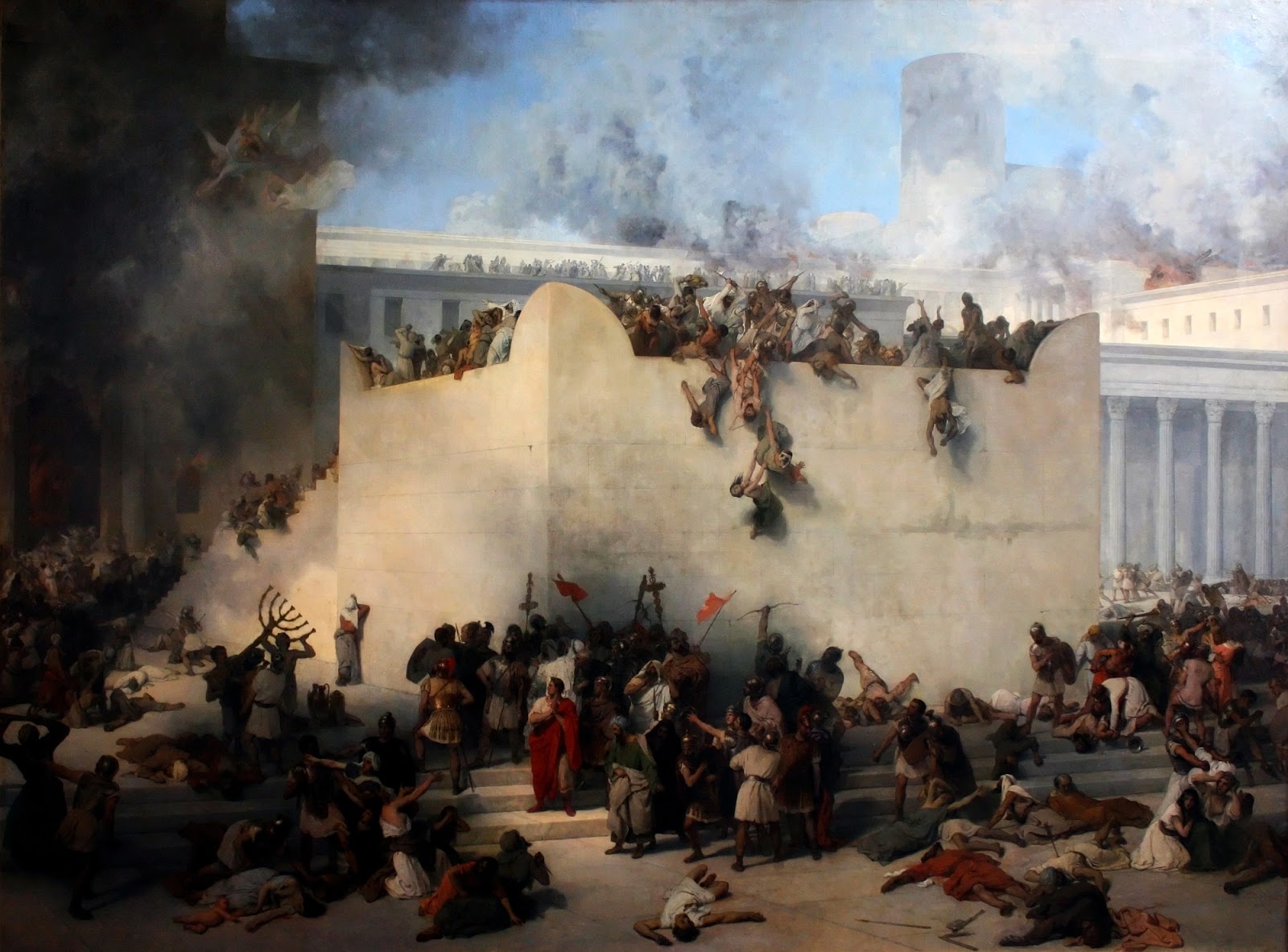
Text: And while some were speaking of the temple, how it was adorned with noble stones and offerings, [Jesus] said, “As for these things that you see, the days will come when there will not be left here one stone upon another that will not be thrown down.”

And they asked him, “Teacher, when will these things be, and what will be the sign when these things are about to take place?”

And he said, “See that you are not led astray. For many will come in my name, saying, ‘I am he!’ and, ‘The time is at hand!’ Do not go after them. And when you hear of wars and tumults, do not be terrified, for these things must first take place, but the end will not be at once.”

Then he said to them, “Nation will rise against nation, and kingdom against kingdom. There will be great earthquakes, and in various places famines and pestilences. And there will be terrors and great signs from heaven.

Luke 21:5-28 “But before all this they will lay their hands on you and persecute you, delivering you up to the synagogues and prisons, and you will be brought before kings and governors for my name's sake. This will be your opportunity to bear witness. Settle it therefore in your minds not to meditate beforehand how to answer, for I will give you a mouth and wisdom, which none of your adversaries will be able to withstand or contradict.

“You will be delivered up even by parents and brothers and relatives and friends, and some of you they will put to death. You will be hated by all for my name’s sake. But not a hair of your head will perish. By your endurance you will gain your lives.

“But when you see Jerusalem surrounded by armies, then know that its desolation has come near. Then let those who are in Judea flee to the mountains, and let those who are inside the city depart, and let not those who are out in the country enter it, for these are days of vengeance, to fulfill all that is written.

“Alas for women who are pregnant and for those who are nursing infants in those days! For there will be great distress upon the earth and wrath against this people. They will fall by the edge of the sword and be led captive among all nations, and Jerusalem will be trampled underfoot by the Gentiles, until the times of the Gentiles are fulfilled.

“And there will be signs in sun and moon and stars, and on the earth distress of nations in perplexity because of the roaring of the sea and the waves, people fainting with fear and with foreboding of what is coming on the world. For the powers of the heavens will be shaken. And then they will see the Son of Man coming in a cloud with power and great glory.

“Now when these things begin to take place, straighten up and raise your heads, because your redemption is drawing near.” Luke 21:5-28

Scripture quoted from The Holy Bible, English Standard Version®, © 2001 by Crossway Bibles, a publishing ministry of Good News Publishers. Used by permission. All rights reserved.

Audio: Click to hear the MP3 of Raise Your Heads

NB: A few people have had problems trying to play the inline audio with Windows Media Player. If this occurs, you can either change to QuickTime or another default browser player, copy and paste the link directly into a selected player, or download it to your computer, where it seems to work regardless of which player. Several folks have suggested VLC Player from VideoLAN.

Other Readings: Malachi 4:1-6; Psalm 98; 2 Thessalonians 3: (1-5) 6-13

Labels: , , , , , , , , , , , ,

10 November 2019

Pentecost 22 Sermon: God of the Living

Preached on Luke 20:27–40
22nd Sunday After Pentecost — Proper 27C
10 November AD 2019

Title: Click to hear the MP3 of God of the Living

Luke 20:27-40 Summary: Not believing in the Resurrection, the Sadducees wanted to ridicule Jesus and discredit this teaching. They came up with the story of the woman widowed seven times, hoping to use earthly life to challenge what Christ taught that believers will experience in the New Creation.

The Lord turned their thinking on its head. He couldn’t answer their question as asked since it began with a faulty premise. He instead used the account of the burning bush to point to the correct question and answer.

Because the living God is also the God of the living, we know that in Christ we have lives that will never end. Therefore, many of this life’s institutions, including marriage, will have no place in the Resurrection.

Text: There came to [Jesus] some Sadducees, those who deny that there is a resurrection, and they asked him a question, saying, “Teacher, Moses wrote for us that if a man’s brother dies, having a wife but no children, the man must take the widow and raise up offspring for his brother.

“Now there were seven brothers. The first took a wife, and died without children. And the second and the third took her, and likewise all seven left no children and died. Afterward the woman also died. In the resurrection, therefore, whose wife will the woman be? For the seven had her as wife.”

And Jesus said to them, “The sons of this age marry and are given in marriage, but those who are considered worthy to attain to that age and to the resurrection from the dead neither marry nor are given in marriage, for they cannot die anymore, because they are equal to angels and are sons of God, being sons of the resurrection.

“But that the dead are raised, even Moses showed, in the passage about the bush, where he calls the Lord the God of Abraham and the God of Isaac and the God of Jacob. Now he is not God of the dead, but of the living, for all live to him.”

Then some of the scribes answered, “Teacher, you have spoken well.” For they no longer dared to ask him any question. Luke 20:27-40

Scripture quoted from The Holy Bible, English Standard Version®, © 2001 by Crossway Bibles, a publishing ministry of Good News Publishers. Used by permission. All rights reserved.

Audio: Click to hear the MP3 of God of the Living

NB: A few people have had problems trying to play the inline audio with Windows Media Player. If this occurs, you can either change to QuickTime or another default browser player, copy and paste the link directly into a selected player, or download it to your computer, where it seems to work regardless of which player. Several folks have suggested VLC Player from VideoLAN.

Other Readings: Psalm 148; Exodus 3:1-15; 2 Thessalonians 2:1-8, 13-17

Labels: , , , , , , , , , , , ,

03 November 2019

All Saints Sermon: What Kind of Love!

Preached on 1 John 3:1-3
All Saints Day
3 November AD 2019

Title: Click to hear the MP3 of What Kind of Love!.

Fra Angelico: Saints Summary: Look! Behold! Pay attention!

Led by the Spirit and following those who came before him, John points clearly to Christ. Any good gifts, any true blessings flow through Jesus from the Father. Because He is the perfect Son who offered the perfect sacrifice, we are God’s children by faith. Because He lives, we live also — in time and throughout eternity.

Humankind can only define itself negatively before God. We are the rebels, Satan’s bastard children, heirs of wrath and judgment. Yet even the vilest sinner discovers by faith in Christ that no iniquity is greater than Jesus’ forgiveness. The most wayward and prodigal of sons still find the Father’s arms welcoming them as He redefines them by water and the Word as His dear children.

We don’t play guessing games, trying to figure out what eternal life will be like or what it means when Jesus returns and we are “like Him.” It is enough to know that we will be completely satisfied, absolutely joyful, and perfectly pure in heart and mind. No matter how exactly the New Creation resembles the various Scriptural images — green pastures and still waters, a never-ending banquet, or a city of gold and jewels — we know that it will be our home because it is where our Savior will lead us to dwell.

Text: See what kind of love the Father has given to us, that we should be called children of God; and so we are.

The reason why the world does not know us is that it did not know him. Beloved, we are God’s children now, and what we will be has not yet appeared; but we know that when he appears we shall be like him, because we shall see him as he is.

And everyone who thus hopes in him purifies himself as he is pure. 1 John 3:1-3

Scripture quoted from The Holy Bible, English Standard Version®, © 2001 by Crossway Bibles, a publishing ministry of Good News Publishers. Used by permission. All rights reserved.

Audio: Click to hear the MP3 of What Kind of Love!

NB: A few people have had problems trying to play the inline audio with Windows Media Player. If this occurs, you can either change to QuickTime or another default browser player, copy and paste the link directly into a selected player, or download it to your computer, where it seems to work regardless of which player. Several folks have suggested VLC Player from VideoLAN.

Other Readings: Psalm 149; Revelation 7:(2-8) 9-17; Matthew 5:1-12

Labels: , , , , , , , , , ,