
Happenings

Sermons by Pastor Walter Snyder plus announcements, articles, videos, and anything else that doesn’t fit Ask the Pastor or the Luther Library.


23 August 2020

Proper 16A Sermon: Rock and Quarry

Preached on Isaiah 51:1–6
The Twelfth Sunday after Pentecost
23 August AD 2020

Video: Click to view the YouTube video of Rock and Quarry.

Audio: Alternatively, choose Rock and Quarry to hear the MP3.
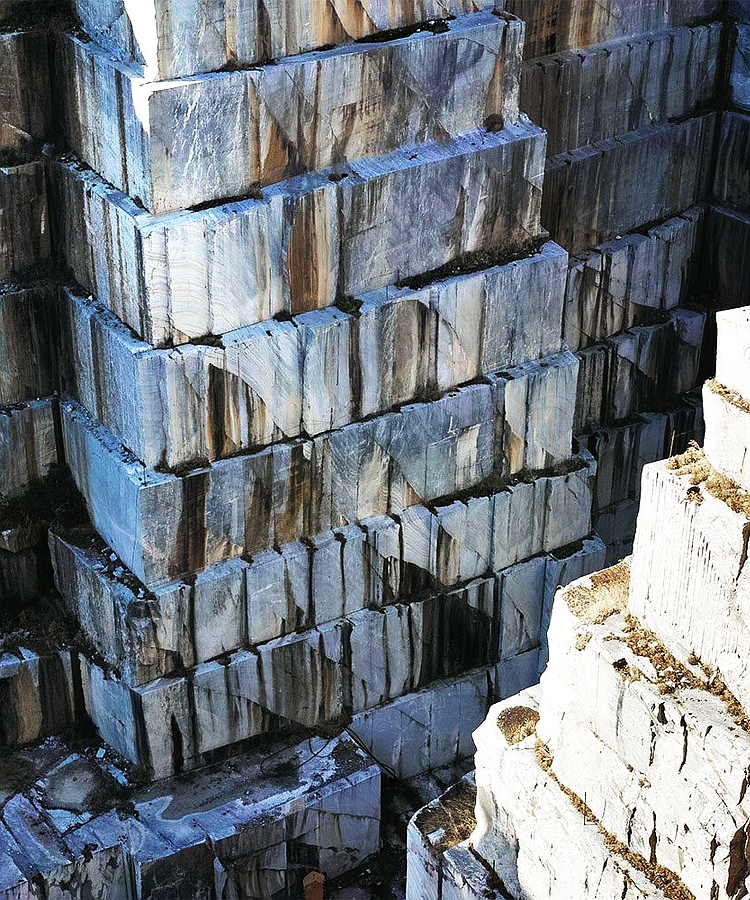
Isaiah 51:1–6 Summary: Isaiah told Judah to look at its history in order to make sense of its present and have hope for its future. The same God who established Abraham as Israel’s father, who carved a nation out of Sarah’s seemingly barren womb, would likewise bless Abraham’s heirs.

The Lord’s righteousness and salvation that established and sustained Abraham and Sarah would likewise preserve their heirs in Isaiah’s time. By faith in Christ, we are also the heirs of Abraham and can be certain that the promises of consolation, preservation, and restoration for Zion belong to us as well.

Text: “Listen to me, you who pursue righteousness, you who seek the Lord: look to the rock from which you were hewn, and to the quarry from which you were dug. Look to Abraham your father and to Sarah who bore you; for he was but one when I called him, that I might bless him and multiply him.

“For the Lord comforts Zion; he comforts all her waste places and makes her wilderness like Eden, her desert like the garden of the Lord; joy and gladness will be found in her, thanksgiving and the voice of song.

“Give attention to me, my people, and give ear to me, my nation; for a law will go out from me, and I will set my justice for a light to the peoples. My righteousness draws near, my salvation has gone out, and my arms will judge the peoples; the coastlands hope for me, and for my arm they wait.

“Lift up your eyes to the heavens, and look at the earth beneath; for the heavens vanish like smoke, the earth will wear out like a garment, and they who dwell in it will die in like manner; but my salvation will be forever, and my righteousness will never be dismayed.” Isaiah 51:1–6

Scripture quoted from The Holy Bible, English Standard Version®, © 2001 by Crossway Bibles, a publishing ministry of Good News Publishers. Used by permission. All rights reserved.

Video: Click to view the YouTube video of Rock and Quarry.

Audio: Alternatively, choose Rock and Quarry to hear the MP3.

Other Readings: Psalm 138; Romans 11:33–12:8; Matthew 16:13–20

Labels: , , , , , , , , , ,

Proper 16A Sermon: The Gates of Hades

Preached on Matthew 16:13–20
The Twelfth Sunday after Pentecost
23 August AD 2020

Video: Click to view the YouTube video of The Gates of Hades.

Audio: Alternatively, choose The Gates of Hades to hear the MP3.

Matthew 16:13–20 Summary: The rock upon which Jesus builds His Church isn’t Peter but rather Peter’s confession. Confessing Jesus as the Christ, Peter thus identified Him as the “spiritual Rock” of whom Israel drank, for “the Rock was Christ. (1 Corinthians 10:4)”

Being built on this Rock gives us the fruits of His victories over sin, death, and devil. The “Son of the Living God” died for us yet He is still the living Son of God. Death comes because of sin. Jesus’ resurrection guarantees that our sins which He carried to the cross are blotted out and cannot hold Him — or us — bound by Hades and eternally trapped in the grave. Jesus kicked down death’s door and grants believers egress into everlasting life.

Text: Now when Jesus came into the district of Caesarea Philippi, he asked his disciples, “Who do people say that the Son of Man is?”

And they said, “Some say John the Baptist, others say Elijah, and others Jeremiah or one of the prophets.”

He said to them, “But who do you say that I am?”

Simon Peter replied, “You are the Christ, the Son of the living God.”

And Jesus answered him, “Blessed are you, Simon Bar-Jonah! For flesh and blood has not revealed this to you, but my Father who is in heaven. And I tell you, you are Peter, and on this rock I will build my church, and the gates of hell shall not prevail against it. I will give you the keys of the kingdom of heaven, and whatever you bind on earth shall be bound in heaven, and whatever you loose on earth shall be loosed in heaven.”

Then he strictly charged the disciples to tell no one that he was the Christ. Matthew 16:13–20

Scripture quoted from The Holy Bible, English Standard Version®, © 2001 by Crossway Bibles, a publishing ministry of Good News Publishers. Used by permission. All rights reserved.

Video: Click to view the YouTube video of The Gates of Hades.

Audio: Alternatively, choose The Gates of Hades to hear the MP3.

Other Readings: Psalm 138; Isaiah 51:1–6; Romans 11:33–12:8

Labels: , , , , , , , , , , , ,

25 August 2019

Pentecost 11 Sermon: New Heavens, New Earth, New People

Preached on Isaiah 66:18–24
11th Sunday After Pentecost — Proper 16C
25 August AD 2019

Title: Click to hear the MP3 of New Heavens, New Earth, New People.

Isaiah 66:18–24 Summary: As his prophecies drew to a close, Isaiah spoke to God’s chosen people and proclaimed that the Lord’s grace extended beyond the borders of Judah. The Gentiles — even the nations that oppressed and carried Israel into captivity — would become His people.

In remaking Creation, as He creates the new heavens and the new earth, God will establish the new Jerusalem, the eternal city peopled by all believers. The multitude coming from east and west, from north and south, is the entirety of humankind who trust His promises of salvation in Christ Jesus.

No believer is exempt from this eternal reunion. There are no other qualifications for citizenship in the eternal kingdom. Paul reiterated this in his epistles. For example, he reminded the Colossians, “Here there is not Greek and Jew, circumcised and uncircumcised, barbarian, Scythian, slave, free; but Christ is all, and in all. (3:11)”

Text: “For I know their works and their thoughts, and the time is coming to gather all nations and tongues. And they shall come and shall see my glory, and I will set a sign among them. And from them I will send survivors to the nations, to Tarshish, Pul, and Lud, who draw the bow, to Tubal and Javan, to the coastlands far away, that have not heard my fame or seen my glory. And they shall declare my glory among the nations.

“And they shall bring all your brothers from all the nations as an offering to the Lord, on horses and in chariots and in litters and on mules and on dromedaries, to my holy mountain Jerusalem, says the Lord, just as the Israelites bring their grain offering in a clean vessel to the house of the Lord. And some of them also I will take for priests and for Levites, says the Lord.

“For as the new heavens and the new earth that I make shall remain before me, says the Lord, so shall your offspring and your name remain. From new moon to new moon, and from Sabbath to Sabbath, all flesh shall come to worship before me, declares the Lord.

“And they shall go out and look on the dead bodies of the men who have rebelled against me. For their worm shall not die, their fire shall not be quenched, and they shall be an abhorrence to all flesh.” Isaiah 66:18-23

Scripture quoted from The Holy Bible, English Standard Version®, © 2001 by Crossway Bibles, a publishing ministry of Good News Publishers. Used by permission. All rights reserved.

Audio: Click to hear the MP3 of New Heavens, New Earth, New People.

NB: A few people have had problems trying to play the inline audio with Windows Media Player. If this occurs, you can either change to QuickTime or another default browser player, copy and paste the link directly into a selected player, or download it to your computer, where it seems to work regardless of which player. Several folks have suggested VLC Player from VideoLAN.

Other Readings: Psalm 50:1-15; Hebrews 12:4-29; Luke 13:22-30

Labels: , , , , , , , , , ,

Pentecost 11 Sermon: Inside, Outside

Preached on Luke 13:22–30
11th Sunday After Pentecost — Proper 16C
25 August AD 2019

Title: Click to hear the MP3 of Inside, Outside.

Luke 13:22–30 Summary: Jesus reminds us that we enter Paradise only by gift. Being in church without being of the Church, saying prayers without praying, listening to the Gospel without believing in Christ as Savior — none of these will admit us to the eternal feast where we’ll “recline at table in the kingdom of God.” Only the Father’s grace and the power of His Holy Spirit bring us eternal life.

Text: [Jesus] went on his way through towns and villages, teaching and journeying toward Jerusalem. And someone said to him, “Lord, will those who are saved be few?”

And he said to them, “Strive to enter through the narrow door. For many, I tell you, will seek to enter and will not be able. When once the master of the house has risen and shut the door, and you begin to stand outside and to knock at the door, saying, ‘Lord, open to us,’ then he will answer you, ‘I do not know where you come from.’

“Then you will begin to say, ‘We ate and drank in your presence, and you taught in our streets.’ But he will say, ‘I tell you, I do not know where you come from. Depart from me, all you workers of evil!’ In that place there will be weeping and gnashing of teeth, when you see Abraham and Isaac and Jacob and all the prophets in the kingdom of God but you yourselves cast out.

“And people will come from east and west, and from north and south, and recline at table in the kingdom of God. And behold, some are last who will be first, and some are first who will be last.” Luke 13:22-30

Scripture quoted from The Holy Bible, English Standard Version®, © 2001 by Crossway Bibles, a publishing ministry of Good News Publishers. Used by permission. All rights reserved.

Audio: Click to hear the MP3 of Inside, Outside.

NB: A few people have had problems trying to play the inline audio with Windows Media Player. If this occurs, you can either change to QuickTime or another default browser player, copy and paste the link directly into a selected player, or download it to your computer, where it seems to work regardless of which player. Several folks have suggested VLC Player from VideoLAN.

Other Readings: Psalm 50:1-15; Isaiah 66:18-23; Hebrews 12:4-29

Labels: , , , , , , , ,

21 August 2016

Pentecost 14 Sermon: Our Home the Untouchable Mountain

Preached on Hebrews 12:4-29
The Fourteenth Sunday after Pentecost — Proper 16C
21 August AD 2016

Title: Our Home the Untouchable Mountain (MP3 Audio)

Hebrews 12:18-21 Summary: In the history of Israel, Sinai was an important — even essential — mountain, but it wasn’t part of the Promised Land. For although He also proclaimed grace and blessing from its heights, the Lord primarily used Sinai to declare His Law, to instruct and discipline — even to terrify — His people.

Zion was the mountain of blessing. After the Ark of the Covenant entered Jerusalem, it was the place where God established His rule. Zion was the mountain where the Lord invited His people to come to receive forgiveness of sins.

As he compares and contrasts these mountains, the author of Hebrews also compares and contrasts the Exodus with the Christian life of pilgrimage to our final resting place. We won’t reach the Promised Land by dwelling at the foot of Sinai, striving to fulfill a Law that is beyond our keeping. We look toward Zion and to the new Jerusalem, the heavenly city, the resting place of the saints.

Given earthly form in Christ’s Church, the fulness of Zion is yet to be revealed. We can only touch it in part but we still receive full forgiveness. Although we still await eternal residence, we already inhabit Mount Zion, living even now by faith as residents of “the city of the living God, the heavenly Jerusalem.”

Hebrews 12:22-24 Text: In your struggle against sin you have not yet resisted to the point of shedding your blood. And have you forgotten the exhortation that addresses you as sons? “My son, do not regard lightly the discipline of the Lord, nor be weary when reproved by him. For the Lord disciplines the one he loves, and chastises every son whom he receives.”

It is for discipline that you have to endure. God is treating you as sons. For what son is there whom his father does not discipline? If you are left without discipline, in which all have participated, then you are illegitimate children and not sons. Besides this, we have had earthly fathers who disciplined us and we respected them. Shall we not much more be subject to the Father of spirits and live? For they disciplined us for a short time as it seemed best to them, but he disciplines us for our good, that we may share his holiness. For the moment all discipline seems painful rather than pleasant, but later it yields the peaceful fruit of righteousness to those who have been trained by it.

Therefore lift your drooping hands and strengthen your weak knees, and make straight paths for your feet, so that what is lame may not be put out of joint but rather be healed. Strive for peace with everyone, and for the holiness without which no one will see the Lord. See to it that no one fails to obtain the grace of God; that no “root of bitterness” springs up and causes trouble, and by it many become defiled; that no one is sexually immoral or unholy like Esau, who sold his birthright for a single meal. For you know that afterward, when he desired to inherit the blessing, he was rejected, for he found no chance to repent, though he sought it with tears.

For you have not come to what may be touched, a blazing fire and darkness and gloom and a tempest and the sound of a trumpet and a voice whose words made the hearers beg that no further messages be spoken to them. For they could not endure the order that was given, “If even a beast touches the mountain, it shall be stoned.” Indeed, so terrifying was the sight that Moses said, “I tremble with fear.”

But you have come to Mount Zion and to the city of the living God, the heavenly Jerusalem, and to innumerable angels in festal gathering, and to the assembly of the firstborn who are enrolled in heaven, and to God, the judge of all, and to the spirits of the righteous made perfect, and to Jesus, the mediator of a new covenant, and to the sprinkled blood that speaks a better word than the blood of Abel.

See that you do not refuse him who is speaking. For if they did not escape when they refused him who warned them on earth, much less will we escape if we reject him who warns from heaven. At that time his voice shook the earth, but now he has promised, “Yet once more I will shake not only the earth but also the heavens.” This phrase, “Yet once more,” indicates the removal of things that are shaken — that is, things that have been made — in order that the things that cannot be shaken may remain. Therefore let us be grateful for receiving a kingdom that cannot be shaken, and thus let us offer to God acceptable worship, with reverence and awe, for our God is a consuming fire. Hebrews 12:4-24 (25-29)

Scripture quoted from The Holy Bible, English Standard Version®, © 2001 by Crossway Bibles, a publishing ministry of Good News Publishers. Used by permission. All rights reserved.

Audio: Click to hear the MP3 of Our Home the Untouchable Mountain

NB: A few people have had problems trying to play the inline audio with Windows Media Player. If this occurs, you can either change to QuickTime or another default browser player, copy and paste the link directly into a selected player, or download it to your computer, where it seems to work regardless of which player. Several folks have suggested VLC Player from VideoLAN.

Other Readings: Psalm 50:1-15; Isaiah 66:18-23; Luke 12:22-30

Labels: , , , , , , , , , , , , , , , , ,